You Know You’re Safe, So Why Doesn’t Your Body Believe You?
Have you ever had the thought, “I know I’m safe, so why do I still feel like something bad is about to happen?”
Maybe you know the accident is over.
You know you are home.
You know the relationship ended.
You know your doctor told you that everything looks okay.
You know the situation you were worried about is probably going to be fine.
And yet your body is still acting like you are in danger.
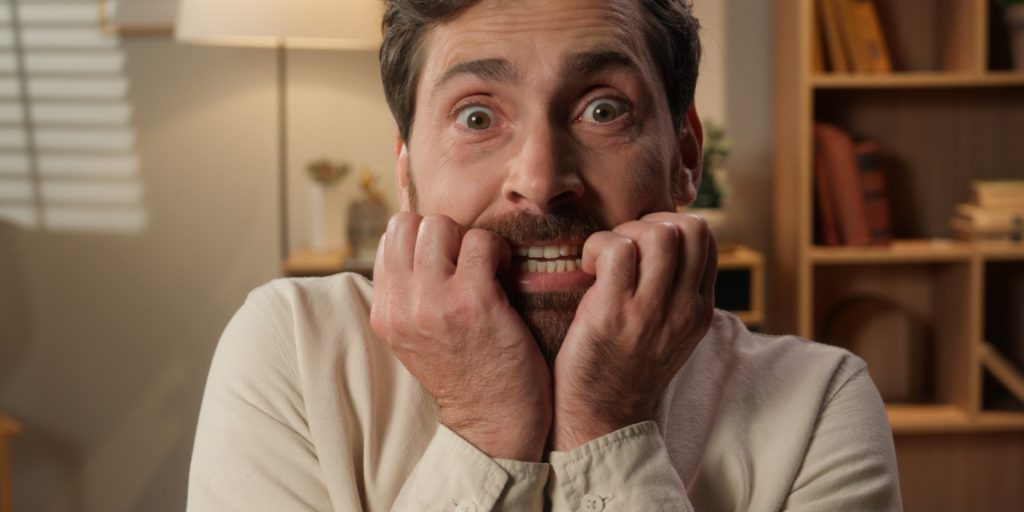
Your heart races. Your stomach drops. Your muscles tense. You feel restless or on edge. You might have trouble sleeping, feel jumpy, or find yourself constantly scanning your surroundings for something that could go wrong.
And then you might get frustrated with yourself.
“Why am I still doing this?”
“I know nothing is wrong.”
“I should be over this by now.”
But here’s the thing: knowing you are safe and feeling safe are not always the same thing.
Your Brain Can Know Something Your Body Hasn’t Learned Yet
When something frightening, painful, or overwhelming happens, your brain and body go into protection mode.
That response is incredibly useful when there is an actual threat. Your heart rate increases. Your muscles get ready to move. Your attention becomes focused on potential danger. Your body basically says, “Pay attention. We need to survive this.”
The problem is that sometimes that alarm system stays turned up even after the danger is gone.
Your thinking brain may understand that the situation is over, but another part of your brain is still looking for signs that it could happen again.
That can create a frustrating disconnect.
Your brain says: “I’m okay.”
Your body says: “Are we sure about that?”
And your body may win that argument for a while.
This Can Happen After Trauma
Trauma does not always look like flashbacks or nightmares.
Sometimes trauma looks like avoiding certain places.
Sometimes it looks like constantly checking things.
Sometimes it looks like feeling uncomfortable when someone doesn’t respond to a text.
Sometimes it looks like being unable to relax because your brain is waiting for the next bad thing to happen.
And sometimes it looks like something very specific.
For example, after a car accident, you may know that driving is statistically safe. You may have driven for years without a problem. You may even know that the accident was a freak occurrence.
But the first time you get back on the highway, your body might react like you are about to crash again.
Your hands grip the steering wheel.
Your shoulders tense.
Your heart starts pounding.
You become hyperaware of every car around you.
You might avoid highways altogether.
Logically, you know you’re not back in the accident.
Your nervous system may not have caught up yet.
Your Body Is Trying to Protect You
This is an important piece that can sometimes get lost when we talk about anxiety and trauma.
Your body is not trying to make your life miserable.
It is trying to protect you.
It learned that something was dangerous, so now it is paying closer attention.
That might mean your nervous system becomes more sensitive to things that remind you of what happened.
A sound.
A smell.
A location.
A particular time of day.
A physical sensation.
A certain type of conversation.
Even something that seems completely unrelated can sometimes trigger a reaction because your brain has connected it to a previous experience.
Your body is essentially saying, “Last time we experienced something like this, it didn’t go well. Let’s be prepared this time.”
Unfortunately, being prepared all the time is exhausting.
This Is Where Avoidance Can Make Things Trickier
When something makes us anxious, avoiding it usually feels really good in the moment.
You don’t want to drive on the highway? Take the back roads.
You don’t want to have that difficult conversation? Put it off.
You don’t want to go somewhere because it reminds you of what happened? Don’t go.
And honestly, your anxiety may drop almost immediately.
The problem is that your brain can learn from that.
It can start to think, “Whew. Good thing we avoided that. That must have been dangerous.”
So the next time you encounter the same situation, the anxiety may come back even stronger.
This does not mean you should force yourself into situations that feel overwhelming or unsafe.
There is a big difference between honoring your limits and allowing fear to slowly shrink your life.
Sometimes the goal is not to make anxiety disappear before you do something.
The goal is to help your brain and body learn, little by little, that you can experience discomfort and still be okay.
So How Do You Teach Your Body That You're Safe?
Unfortunately, there isn’t a magic sentence you can say to your nervous system that instantly fixes everything.
Wouldn’t that be nice?
Instead, safety is often learned through repeated experiences.
You notice the anxiety.
You learn how your body responds.
You practice staying present instead of immediately escaping the feeling.
You gradually approach things you have been avoiding when it is appropriate to do so.
And over time, your brain gets new information.
“I was anxious, and I handled it.”
“I drove somewhere and made it home safely.”
“I had the difficult conversation, and I survived the discomfort.”
“I felt my heart racing, and nothing terrible happened.”
Those experiences matter.
They give your brain and body something new to work with.
Therapy Can Help
Sometimes you can work through these patterns on your own. Sometimes you need some help figuring out why your nervous system is still sounding the alarm.
That’s where therapy can be helpful.
Trauma-focused therapies, including EMDR, can help people process experiences that still feel emotionally or physically “stuck.”
The goal isn’t to convince yourself that what happened wasn’t scary.
It is not about pretending that the experience didn’t affect you.
It is about helping your brain process what happened so that you can begin to respond to the present instead of constantly reacting to the past.
Because there is a difference between remembering that something happened and feeling like it is still happening.
You Don't Have to Be “Over It” to Be Healing
One of the hardest parts of anxiety and trauma can be the expectation that you should be over it by now.
Maybe months have passed.
Maybe years have passed.
Maybe everyone around you has moved on.
But healing isn’t always about forgetting what happened or never feeling anxious again.
Sometimes healing looks like noticing that your body reacted differently this time.
Maybe you drove a little farther.
Maybe you stayed in the conversation instead of shutting down.
Maybe you went somewhere you had been avoiding.
Maybe you noticed the anxiety without immediately assuming something was wrong.
Those moments count.
Your brain and body can learn that the danger is over.
It just may take some time.
So if you’re thinking, “I know I’m safe, so why don’t I feel safe?”, there is nothing wrong with you.
Your logical brain and your nervous system are simply working from different information.
And with time, patience, and the right support, they can start getting on the same page.